
Top Investment Strategies for Beginners sets the stage for this enthralling narrative, offering readers a glimpse into a story that is rich in detail with casual formal language style and brimming with originality from the outset.
This guide will delve into key aspects of investment strategies, providing valuable insights and tips for beginners looking to navigate the world of finance with confidence.
Introduction to Investment Strategies for Beginners
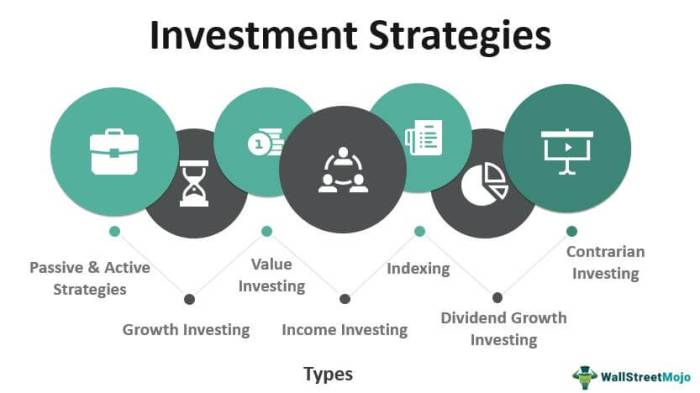
When starting out as a beginner in the world of investing, having a solid investment strategy is crucial for long-term success and financial growth. Without a clear plan in place, individuals may be more prone to making impulsive decisions or falling prey to market fluctuations.
Having a well-thought-out investment strategy offers numerous benefits, such as:
Benefits of a Well-Planned Investment Strategy
- Helps in defining clear financial goals and objectives.
- Provides a roadmap for making informed investment decisions.
- Minimizes risks by diversifying investments.
- Ensures discipline in sticking to the plan during market uncertainties.
- Allows for tracking progress and making necessary adjustments over time.
Common Pitfalls to Avoid in Investment Strategy Development
- Not conducting thorough research before investing.
- Letting emotions drive investment decisions instead of logic.
- Putting all eggs in one basket without diversifying.
- Overlooking the importance of regular portfolio reviews.
- Chasing short-term gains instead of focusing on long-term growth.
Understanding Different Types of Investments
When it comes to investing, beginners have a variety of options to choose from. Understanding the different types of investments is crucial for developing a well-rounded investment strategy.
Stocks
Stocks represent ownership in a company and can offer high returns, but they also come with a higher level of risk. It’s essential to research and analyze individual companies before investing in their stocks.
Bonds
Bonds are debt securities issued by corporations or governments. They are considered lower risk compared to stocks but typically offer lower returns. Bonds can provide a steady income stream through interest payments.
Mutual Funds
Mutual funds pool money from multiple investors to invest in a diversified portfolio of stocks, bonds, or other securities. They offer diversification and professional management, making them a popular choice for beginners.
Real Estate
Investing in real estate involves purchasing properties with the expectation of generating income or appreciation. Real estate can provide a steady cash flow through rental income and potential long-term appreciation.
Diversification plays a key role in investment strategies by spreading risk across different asset classes.
Setting Investment Goals and Risk Tolerance
When starting your investment journey, it is crucial to establish clear and realistic investment goals based on your financial objectives. Setting specific goals will help you stay focused and motivated throughout your investment journey.
Understanding Risk Tolerance
Risk tolerance refers to your ability and willingness to endure fluctuations in the value of your investments. It is essential to assess your risk tolerance before deciding on an investment strategy, as it will determine the level of risk you are comfortable with.
- Determine your risk appetite by assessing how much volatility you can handle in your investment portfolio.
- Consider factors such as your age, financial goals, and investment timeline when evaluating your risk tolerance.
- Understand that higher returns often come with higher risks, so it is crucial to find a balance that aligns with your risk tolerance.
Setting Investment Goals
Setting investment goals is essential for creating a roadmap to financial success. Here are some tips to help you establish realistic investment goals:
- Define clear and specific goals, whether they are short-term or long-term objectives.
- Consider your financial situation, including income, expenses, and existing assets, when setting investment goals.
- Align your investment goals with your risk tolerance to ensure a balanced approach to investing.
Long-Term vs. Short-Term Investment Strategies
When it comes to investing, one of the key decisions beginners need to make is whether to focus on long-term or short-term investment strategies. Each approach has its own set of benefits and considerations that can significantly impact the success of an investment portfolio.Long-term investment strategies involve holding onto assets for an extended period, usually for years or even decades.
These strategies are typically less focused on short-term market fluctuations and more on the long-term growth potential of the investments. On the other hand, short-term investment strategies involve buying and selling assets within a shorter time frame, often taking advantage of market volatility or short-term price movements.
Significance of Investment Horizon
Having a clear understanding of your investment horizon is crucial in shaping your investment strategy. Your investment horizon refers to the length of time you plan to hold onto your investments before needing to access the funds. It plays a significant role in determining whether a long-term or short-term approach is more suitable for your financial goals and risk tolerance.
- Long-Term Investment Strategies:
- Examples: Investing in a diversified portfolio of low-cost index funds or ETFs, setting up a retirement account like a 401(k) or IRA, investing in real estate for rental income.
- Benefits: Allows for compounding returns over time, reduces the impact of short-term market volatility, aligns with long-term financial goals such as retirement planning.
- Short-Term Investment Strategies:
- Examples: Day trading individual stocks, swing trading options, investing in cryptocurrencies, participating in IPOs.
- Benefits: Potential for quick profits in a short period, ability to take advantage of short-term market trends, flexibility to react to market changes.
Creating a Diversified Investment Portfolio
Diversification is a key strategy in investing that involves spreading your investments across different asset classes to reduce risk. By diversifying, you can minimize the impact of poor performance in one investment on your overall portfolio.
Guidelines for Diversifying a Portfolio
- Allocate investments across different asset classes such as stocks, bonds, real estate, and commodities.
- Consider investing in both domestic and international markets to further diversify your portfolio.
- Include a mix of high-risk, high-return investments, and low-risk, stable assets to balance out potential losses.
- Invest in various industries to avoid concentration risk in one sector.
Importance of Rebalancing Your Portfolio
Rebalancing your portfolio involves periodically reviewing and adjusting your asset allocation to maintain diversification. Over time, the performance of different assets may vary, leading to an imbalance in your portfolio. By rebalancing, you can ensure that your investments align with your risk tolerance and financial goals.
Seeking Professional Investment Advice
When it comes to navigating the complex world of investments, seeking professional advice can be invaluable for beginners. Investment advisors can provide personalized guidance tailored to your financial goals and risk tolerance, helping you make informed decisions in the market.
Advantages of Consulting an Investment Advisor
- Personalized guidance based on your financial situation and goals.
- Expertise and knowledge of the financial markets to help you make informed decisions.
- Continuous monitoring of your investments and adjusting strategies as needed.
- Access to a wide range of investment options and opportunities.
Choosing a Reliable Investment Advisor
- Check qualifications and certifications to ensure expertise in the field.
- Look for a track record of success and positive client testimonials.
- Evaluate fees and charges to understand the cost of the advisory services.
- Seek recommendations from trusted sources or professionals in the financial industry.
Exploring Investment Opportunities
As beginners start their investment journey, it’s important to explore different investment opportunities to build a diverse portfolio and achieve their financial goals.
Various Investment Opportunities for Beginners
When starting out, beginners can consider investing in individual stocks, Exchange-Traded Funds (ETFs), and retirement accounts like 401(k) or Individual Retirement Accounts (IRAs).
- Individual Stocks: Investing in individual stocks allows beginners to own shares of a specific company, providing potential for high returns but also carrying higher risk.
- ETFs: ETFs offer diversification by pooling investors’ money to invest in a collection of stocks or other assets, reducing individual stock risk.
- Retirement Accounts: Retirement accounts like 401(k) or IRAs provide tax advantages and long-term investment growth for retirement savings.
Factors to Consider in Evaluating Investment Opportunities
When evaluating different investment opportunities, beginners should consider factors such as:
- Risk tolerance
- Time horizon
- Investment goals
- Market trends
- Industry analysis
It is essential to assess these factors to make informed investment decisions.
Staying Informed about Emerging Investment Trends
Beginners can stay informed about emerging investment trends and opportunities through:
- Reading financial news and publications
- Attending investment seminars or webinars
- Following reputable financial analysts and experts on social media
- Utilizing investment research tools and platforms
Implementing an Effective Investment Strategy
Once beginners have chosen their investment strategy, the next step is to effectively implement it. This involves a structured approach to ensure that the chosen strategy is put into action in a disciplined manner.
Step-by-Step Process for Implementation
- Evaluate Current Financial Situation: Before implementing any investment strategy, beginners should assess their current financial status, including income, expenses, and existing assets.
- Set Clear Investment Objectives: Define specific investment goals, such as retirement savings, buying a home, or funding education, to guide the investment strategy.
- Select Suitable Investment Vehicles: Choose appropriate investment options based on risk tolerance, time horizon, and financial goals.
- Create a Diversified Portfolio: Spread investments across different asset classes to manage risk and optimize returns.
- Monitor Performance Regularly: Keep track of investment performance and make adjustments as needed to stay on course with the strategy.
Best Practices for Monitoring and Adjusting
- Review Investment Portfolio: Regularly assess the performance of investments to ensure they align with the set objectives.
- Rebalance Portfolio: Adjust asset allocation periodically to maintain the desired risk-return balance.
- Stay Informed: Keep abreast of market trends, economic developments, and changes in investment options to make informed decisions.
Importance of Discipline and Patience
Discipline and patience are crucial in sticking to an investment strategy for long-term success. Avoid emotional decision-making based on short-term market fluctuations and focus on the bigger picture of achieving financial goals over time.
In conclusion, mastering the art of investment strategies is a crucial step towards securing a stable financial future. By following the advice Artikeld in this guide, beginners can embark on their investment journey with clarity and purpose.
FAQ Section
What are some common pitfalls beginners should avoid when devising an investment strategy?
Beginners should steer clear of investing in complex financial products they don’t understand and avoid making emotional decisions based on market fluctuations.
How can beginners balance risk and reward when setting investment goals?
Beginners can balance risk and reward by diversifying their investment portfolio across different asset classes and setting realistic goals based on their financial objectives.


