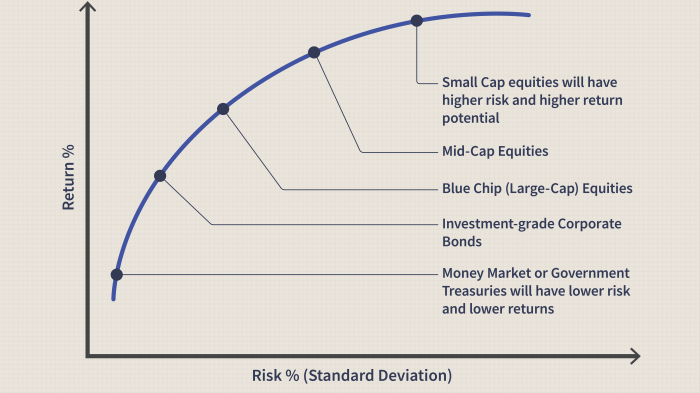
Investment Horizon and Asset Allocation sets the stage for this enthralling narrative, offering readers a glimpse into a story that is rich in detail with a focus on optimizing returns through strategic planning.
As we delve into the intricacies of investment horizons and asset allocation, we uncover the key principles that drive successful investment decisions and risk management strategies.
Investment Horizon
Investment horizon refers to the period of time an investor plans to hold an investment before selling it. It is a crucial factor in determining the appropriate investment strategy and risk tolerance level.
Short-Term Investment Horizon
A short-term investment horizon typically ranges from a few days to a year. Examples include savings accounts, money market funds, and short-term bonds. Investors with a short-term horizon tend to prioritize liquidity and capital preservation.
Medium-Term Investment Horizon
A medium-term investment horizon usually spans one to five years. Examples include corporate bonds, real estate, and balanced mutual funds. Investors with a medium-term horizon are often looking for a balance between risk and return.
Long-Term Investment Horizon
A long-term investment horizon extends beyond five years and can even reach decades. Examples include stocks, retirement accounts, and long-term bonds. Investors with a long-term horizon can afford to take on more risk in pursuit of higher returns.The investment horizon plays a crucial role in shaping an investor’s risk tolerance and decision-making process. Short-term investors are more sensitive to market fluctuations and economic conditions, while long-term investors can ride out short-term volatility and focus on the overall growth potential of their investments.
Asset Allocation
Asset allocation is a crucial component of investment planning as it involves dividing an investment portfolio among different asset classes such as stocks, bonds, and cash equivalents. The goal of asset allocation is to create a diversified portfolio that balances risk and return based on an individual’s financial goals, risk tolerance, and time horizon.
Key Factors in Determining Asset Allocation
- Investor’s Risk Tolerance: Understanding how much risk an investor is willing to take on is essential in determining the asset allocation mix.
- Time Horizon: The length of time an investor plans to hold investments can influence the asset allocation strategy.
- Financial Goals: Whether the goal is wealth accumulation, income generation, or capital preservation, it impacts the asset allocation decisions.
- Market Conditions: Economic conditions and market trends can also play a role in determining the appropriate asset allocation.
Asset Allocation Strategies
There are several asset allocation strategies to consider based on an investor’s goals and risk tolerance:
- Aggressive Portfolio: An aggressive portfolio typically consists of a higher percentage of stocks, which carry more risk but also have the potential for higher returns.
- Conservative Portfolio: A conservative portfolio focuses on preserving capital and may have a higher allocation to bonds and cash equivalents, which are considered safer investments.
- Balanced Portfolio: A balanced portfolio combines both stocks and bonds in a proportion that aligns with the investor’s risk tolerance and financial objectives.
Investment Advice

Investment advisors play a crucial role in helping clients make informed financial decisions that align with their goals and risk tolerance. These professionals provide personalized advice tailored to individual circumstances, guiding clients through market volatility and helping them achieve their financial objectives.
Role of Investment Advisors
Investment advisors serve as trusted partners who offer expert guidance on investment strategies, asset allocation, and risk management. They assess clients’ financial goals, time horizon, and tolerance for risk to develop customized investment plans that meet their unique needs.
- Provide recommendations on suitable investment options based on clients’ objectives and preferences.
- Offer insights on market trends, economic conditions, and potential risks to help clients make informed decisions.
- Monitor portfolios regularly and make adjustments as needed to ensure alignment with clients’ goals and risk tolerance.
Importance of Personalized Advice
Personalized investment advice is essential to help clients navigate the complexities of the financial markets and achieve their long-term objectives. By understanding each client’s specific needs and preferences, investment advisors can create tailored strategies that optimize returns while managing risks effectively.
- Assess clients’ risk tolerance and investment goals to develop a customized portfolio that balances growth potential with risk management.
- Provide ongoing guidance and support to help clients stay focused on their financial goals amid market fluctuations and economic uncertainties.
- Educate clients on investment options, potential risks, and strategies to help them make informed decisions that align with their objectives.
Examples of Advisor Assistance
Investment advisors assist clients in various ways to navigate market volatility and achieve financial success. They provide support during challenging market conditions, offer timely advice on portfolio adjustments, and help clients stay disciplined in their investment approach to reach their long-term goals.
- During market downturns, advisors may recommend rebalancing portfolios to maintain diversification and reduce risk exposure.
- When clients face unexpected financial events, advisors can provide guidance on adjusting investment strategies to mitigate potential losses and protect wealth.
- By continuously monitoring market trends and economic developments, advisors help clients capitalize on opportunities and avoid common pitfalls that may impact their investment performance.
Investment Banking
Investment banks play a crucial role in the financial markets by providing a wide range of services to corporations, governments, and other institutions. These services include underwriting, mergers and acquisitions (M&A) advisory, asset management, trading, and research.
Functions and Services Offered
Investment banks help companies raise capital through debt and equity offerings, acting as intermediaries between the issuers and investors. They also provide strategic advice on M&A transactions, helping clients navigate complex deals and maximize value. In addition, investment banks engage in proprietary trading, where they trade securities and other financial instruments for their own account.
- Underwriting: Investment banks help companies issue new securities to raise capital by guaranteeing a price for the securities and selling them to investors.
- Mergers and Acquisitions (M&A) Advisory: Investment banks provide advice to companies looking to buy or sell other businesses, helping them assess potential targets, negotiate deals, and structure transactions.
- Asset Management: Investment banks offer a range of asset management services, including managing investment portfolios for institutional and individual clients.
- Research: Investment banks conduct research on companies, industries, and market trends to provide insights to clients and support their investment decisions.
Difference Between Traditional Banking and Investment Banking
Traditional banks focus on taking deposits, making loans, and providing basic financial services to individuals and businesses. In contrast, investment banks are more involved in capital markets activities, such as underwriting securities, trading, and advisory services for corporate clients.
Investment banks are typically more specialized and deal with larger transactions, while traditional banks have a broader customer base and offer a wider range of retail banking services.
Role in Facilitating Capital Raising
Investment banks play a key role in helping corporations and governments raise capital through the issuance of debt and equity securities. By underwriting these offerings and providing access to a wide network of investors, investment banks help entities secure the funding they need to finance their operations, investments, and growth initiatives.
- Debt Offerings: Investment banks assist companies in issuing bonds and other debt instruments to raise funds for various purposes, including refinancing existing debt, funding acquisitions, and supporting working capital needs.
- Equity Offerings: Investment banks help companies go public through initial public offerings (IPOs) and follow-on equity offerings, enabling them to raise capital by selling ownership stakes to investors.
- Government Funding: Investment banks also work with governments to raise capital through the issuance of sovereign bonds, helping finance public projects and infrastructure development.
Investment Opportunities
When looking for investment opportunities, it’s essential to consider various sectors such as technology, real estate, or healthcare. These sectors often present different risk-return profiles and growth potentials, offering investors a diverse range of options to explore.
Technology Sector
The technology sector is known for its rapid innovation and disruptive nature, making it an attractive investment opportunity for many investors. Factors such as advancements in artificial intelligence, cloud computing, and e-commerce can drive growth and profitability in this sector.
- Investors can evaluate tech companies based on their product pipeline, market share, and competitive positioning.
- Look for companies with a strong track record of innovation and a solid balance sheet to withstand market volatility.
- Consider the long-term growth potential of emerging technologies like blockchain, cybersecurity, and digital healthcare.
Real Estate Sector
The real estate sector offers investors the opportunity to diversify their portfolios and generate passive income through rental properties or real estate investment trusts (REITs). Factors such as location, property type, and market trends can impact the attractiveness of real estate investments.
- Investors should conduct thorough research on local real estate markets, demographic trends, and rental demand before making investment decisions.
- Consider investing in commercial properties, residential real estate, or industrial properties based on your risk tolerance and investment goals.
- Look for opportunities in emerging real estate markets or up-and-coming neighborhoods with potential for growth and appreciation.
Healthcare Sector
The healthcare sector is known for its stability and resilience, offering investors the opportunity to invest in companies involved in pharmaceuticals, biotechnology, medical devices, and healthcare services. Factors such as regulatory approvals, clinical trial results, and demographic trends can impact the performance of healthcare investments.
- Investors can focus on companies with a strong pipeline of innovative products, a robust intellectual property portfolio, and a history of successful drug launches.
- Consider the potential impact of healthcare reforms, aging populations, and global health crises on the healthcare sector.
- Look for opportunities in telemedicine, precision medicine, and healthcare technology companies driving innovation and efficiency in the industry.
Investment Strategy
Having a well-defined investment strategy is crucial for achieving financial goals and managing risk effectively. It helps investors stay focused, make informed decisions, and navigate the complexities of the market with confidence.
Types of Investment Strategies
- Value Investing: This strategy involves identifying undervalued stocks that have the potential to increase in value over time. Value investors look for companies trading below their intrinsic value, aiming to benefit from the market eventually recognizing their true worth.
- Growth Investing: Growth investors seek companies with strong growth potential, focusing on businesses that are expected to expand rapidly and generate substantial returns. This strategy typically involves investing in innovative industries or emerging markets.
- Dividend Investing: Dividend investors prioritize stocks that pay regular dividends, aiming to generate a steady income stream from their investments. These investors often look for companies with a history of stable dividend payments and strong financial performance.
Alignment with Investment Goals and Risk Profiles
Each investment strategy aligns with different investment goals and risk profiles, catering to the preferences and objectives of individual investors.
For example, value investing may appeal to conservative investors looking for stable returns over the long term, while growth investing could be suitable for those willing to take on higher risk in pursuit of higher rewards.
In conclusion, understanding the dynamics of investment horizon and asset allocation is paramount in achieving financial goals and securing a stable financial future. By implementing sound strategies and staying informed about market trends, investors can navigate the ever-changing landscape of investments with confidence and foresight.
Question & Answer Hub
What is the significance of investment horizon in financial terms?
The investment horizon determines the time frame for an investment, influencing decision-making and risk tolerance levels.
How is asset allocation defined and why is it important in investment planning?
Asset allocation involves distributing investments across different asset classes to manage risk and optimize returns. It is crucial for long-term investment success.
What are the key factors to consider when determining asset allocation?
Factors such as risk tolerance, financial goals, time horizon, and market conditions play a significant role in determining the appropriate asset allocation strategy.
What are the different types of investment strategies that align with various goals and risk profiles?
Investment strategies like value investing, growth investing, and dividend investing cater to different objectives and risk appetites of investors.
How do investment advisors assist clients in navigating market volatility?
Investment advisors provide personalized advice, helping clients make informed decisions during market fluctuations to achieve their financial objectives.