Embark on a journey through the realms of Investment Horizon and Risk Tolerance, where financial decisions meet calculated risks and long-term gains.
Delve into the intricacies of investment planning and risk management, ensuring a balanced approach towards financial growth and stability.
Investment Horizon
An investment horizon refers to the length of time an investor plans to hold an investment before selling it. The investment horizon is a crucial factor that influences investment decisions and strategies.
Short-term Investment Horizon
A short-term investment horizon typically ranges from a few months to one year. Investors with a short-term horizon are focused on capitalizing on immediate market opportunities or meeting short-term financial goals. Examples of short-term investments include savings accounts, certificates of deposit (CDs), and money market funds.
Medium-term Investment Horizon
A medium-term investment horizon usually spans from one to five years. Investors with a medium-term horizon are looking to achieve moderate growth and are willing to take on slightly more risk than those with a short-term horizon. Examples of medium-term investments include bonds, balanced mutual funds, and real estate.
Long-term Investment Horizon
A long-term investment horizon extends beyond five years and can last for decades. Investors with a long-term horizon are focused on building wealth over time, taking advantage of compounding returns, and weathering market fluctuations. Examples of long-term investments include stocks, equity mutual funds, and retirement accounts.Aligning the investment horizon with financial goals is essential for maximizing returns and managing risk effectively.
Short-term goals are best suited to short-term investments, while long-term goals align with long-term investments. It is crucial to consider the time horizon when creating an investment portfolio to ensure it meets the desired financial objectives.
Risk Tolerance
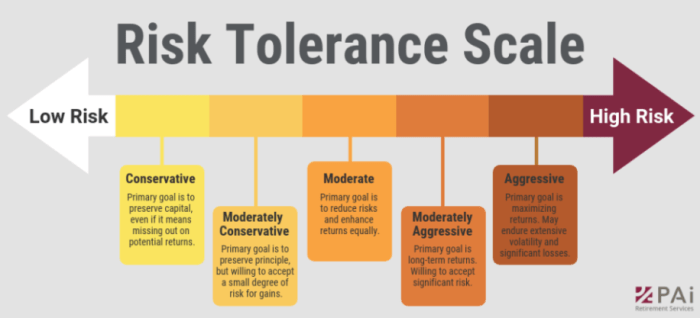
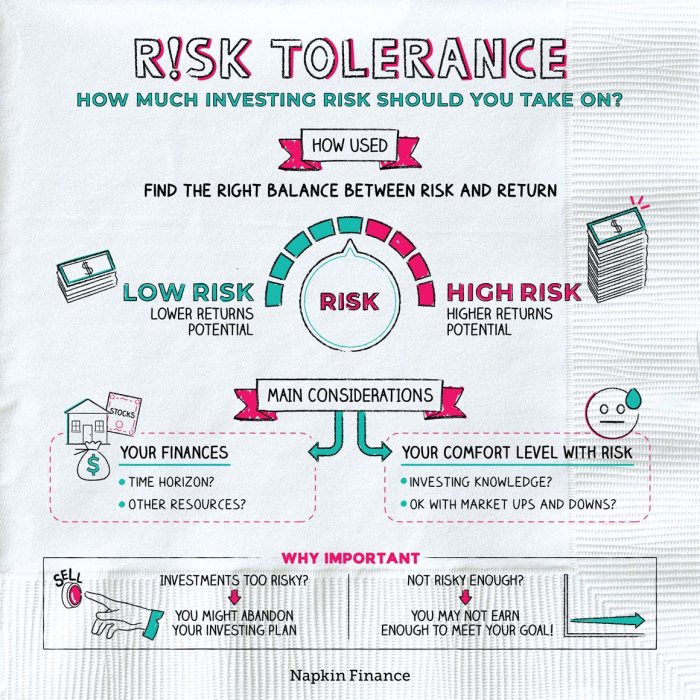
Risk tolerance in the context of investing refers to an individual’s willingness and ability to endure fluctuations in the value of their investments in pursuit of potentially higher returns. It is a crucial factor that influences the decision-making process when constructing an investment portfolio.
Assessing Risk Tolerance
Determining an individual’s risk tolerance involves considering various factors such as their financial goals, time horizon, investment knowledge, and emotional temperament. Some strategies to assess risk tolerance include:
- Questionnaires: Using risk assessment tools provided by financial institutions to gauge an individual’s comfort level with different levels of risk.
- Reviewing Past Behavior: Analyzing how an individual has reacted to market fluctuations in the past can provide insights into their risk tolerance.
- Consulting with a Financial Advisor: Seeking guidance from a professional can help clarify an individual’s risk tolerance and align it with their investment objectives.
Impact on Asset Allocation and Investment Choices
An individual’s risk tolerance influences their asset allocation decisions and the types of investments they choose to include in their portfolio. Here’s how risk tolerance impacts asset allocation and investment choices:
- Conservative Risk Tolerance: Individuals with a low risk tolerance are likely to favor safer investments such as bonds or cash equivalents to preserve capital.
- Moderate Risk Tolerance: Those with a moderate risk tolerance may opt for a balanced mix of stocks and bonds to achieve a blend of growth and stability.
- Aggressive Risk Tolerance: Investors with a high risk tolerance may allocate a larger portion of their portfolio to equities or alternative investments with higher growth potential but also higher volatility.
Investment Advice
Investment advisors play a crucial role in providing personalized investment advice to individuals looking to grow their wealth and achieve their financial goals. These professionals use their expertise to tailor investment strategies based on the unique circumstances and objectives of each client.
Consideration of Investment Horizon and Risk Tolerance
When offering recommendations, investment advisors take into account factors such as the client’s investment horizon and risk tolerance. The investment horizon refers to the length of time an individual plans to hold an investment before needing the funds. Advisors consider this timeline when selecting suitable investment options to align with the client’s goals. Additionally, risk tolerance indicates the client’s comfort level with market fluctuations and potential losses.
By understanding this factor, advisors can recommend investment vehicles that match the client’s risk profile.
- Investment Horizon: Investment advisors analyze the client’s financial goals and time horizon to recommend investments that align with their objectives. For example, a client with a long-term investment horizon may be advised to consider growth-oriented assets like stocks.
- Risk Tolerance: By assessing the client’s risk tolerance, advisors can suggest a diversified portfolio that balances risk and return. Clients with a conservative risk tolerance may be advised to allocate a larger portion of their portfolio to fixed-income securities.
Benefits of Seeking Professional Investment Advice
Seeking professional investment advice offers several benefits for effective portfolio management.
- Personalized Recommendations: Investment advisors provide tailored investment strategies based on the client’s unique financial situation, goals, and risk tolerance.
- Expertise and Knowledge: Advisors bring a wealth of experience and expertise to the table, helping clients navigate complex investment decisions and market fluctuations.
- Diversification and Risk Management: Professional advisors assist clients in building diversified portfolios to spread risk and optimize returns based on their risk tolerance.
- Continuous Monitoring and Adjustments: Advisors regularly monitor the performance of investments and make necessary adjustments to ensure alignment with the client’s goals and changing market conditions.
Investment Banking
Investment banks play a crucial role in the financial world by providing a wide range of services to clients looking to invest or raise capital.
Services Offered by Investment Banks
Investment banks offer services such as underwriting securities, providing mergers and acquisitions advice, facilitating restructurings, and managing assets for clients.
- Underwriting securities involves helping companies issue stocks or bonds to raise capital from investors.
- Providing mergers and acquisitions advice includes assisting companies in buying or selling other businesses to expand their operations.
- Facilitating restructurings involves helping companies reorganize their debt or operations to improve financial performance.
- Managing assets for clients includes offering investment advice and managing portfolios to help clients achieve their financial goals.
Role of Investment Banks in Capital Raising
Investment banks help businesses raise capital by underwriting securities, such as stocks and bonds, and selling them to investors on behalf of the company. This process allows companies to access funding to grow their business and finance new projects.
Investment banks act as intermediaries between companies seeking capital and investors looking for investment opportunities.
Assistance in Complex Financial Transactions
Investment banks assist clients in navigating complex financial transactions, such as mergers, acquisitions, and restructurings, by providing expertise, advice, and strategic guidance throughout the process. They help clients evaluate potential risks and opportunities, structure deals, and negotiate terms to ensure successful outcomes.
- By leveraging their industry knowledge and network of contacts, investment banks help clients identify suitable investment opportunities and connect with potential investors or buyers.
- They also conduct due diligence, financial analysis, and valuation assessments to ensure that clients make informed decisions based on accurate information.
Investment Opportunities
Investment opportunities come in various forms, each with its own level of risk and potential for returns. It is essential for investors to understand the different types of investment options available to make informed decisions.
Traditional vs. Newer Investment Options
- Traditional Investments: Traditional investment options include stocks, bonds, mutual funds, and real estate. These are well-established and have a track record of performance over time.
- Newer Opportunities: Newer investment options such as cryptocurrency, peer-to-peer lending, and crowdfunding platforms have gained popularity in recent years. These alternative investments offer unique opportunities but also come with higher risks.
Factors to Consider in Evaluating Investment Opportunities
- Risk Tolerance: Assess your risk tolerance before exploring investment opportunities. Higher-risk investments may offer the potential for higher returns but also come with a greater chance of loss.
- Time Horizon: Consider your investment time horizon when evaluating opportunities. Short-term investments may be suitable for immediate financial goals, while long-term investments can help build wealth over time.
- Market Conditions: Evaluate the current market conditions and economic outlook before making investment decisions. Understanding the broader economic landscape can help you identify potential opportunities.
- Diversification: Diversifying your investment portfolio can help mitigate risk. Consider spreading your investments across different asset classes and industries to reduce exposure to any single risk factor.
Investment Strategy
Having a well-defined investment strategy is crucial for achieving your financial goals and managing risk effectively. An investment strategy Artikels how you will allocate your funds, which assets you will invest in, and for how long you plan to hold your investments.
Types of Investment Strategies
- Growth Investing: This strategy focuses on investing in companies that are expected to grow at an above-average rate compared to the market. Investors using this strategy are willing to take on more risk in exchange for potentially higher returns.
- Value Investing: Value investors look for undervalued stocks or assets that are trading below their intrinsic value. They believe that these investments have the potential to increase in value over time.
- Dollar-Cost Averaging: This strategy involves investing a fixed amount of money at regular intervals, regardless of market conditions. This approach can help reduce the impact of market volatility on your investments over time.
Tailoring Your Investment Strategy
It’s essential to tailor your investment strategy based on your investment horizon and risk tolerance. For example, if you have a long-term investment horizon and a high risk tolerance, you may opt for a growth investing strategy to capitalize on potential high returns. On the other hand, if you have a short-term horizon and a low risk tolerance, a more conservative approach like value investing may be suitable for you.
In conclusion, understanding the dynamics of Investment Horizon and Risk Tolerance is key to navigating the unpredictable waters of the financial world with confidence and prudence.
FAQ Summary
How does investment horizon affect decision-making?
Investment horizon determines the time frame for your investments, influencing the choice of assets and strategies to achieve financial goals.
What is the significance of risk tolerance in investing?
Risk tolerance defines your ability to withstand market fluctuations and guides the selection of investments aligning with your comfort level.
Why is seeking professional investment advice important?
Professional advice considers factors like investment horizon and risk tolerance, offering personalized strategies for effective portfolio management.


